
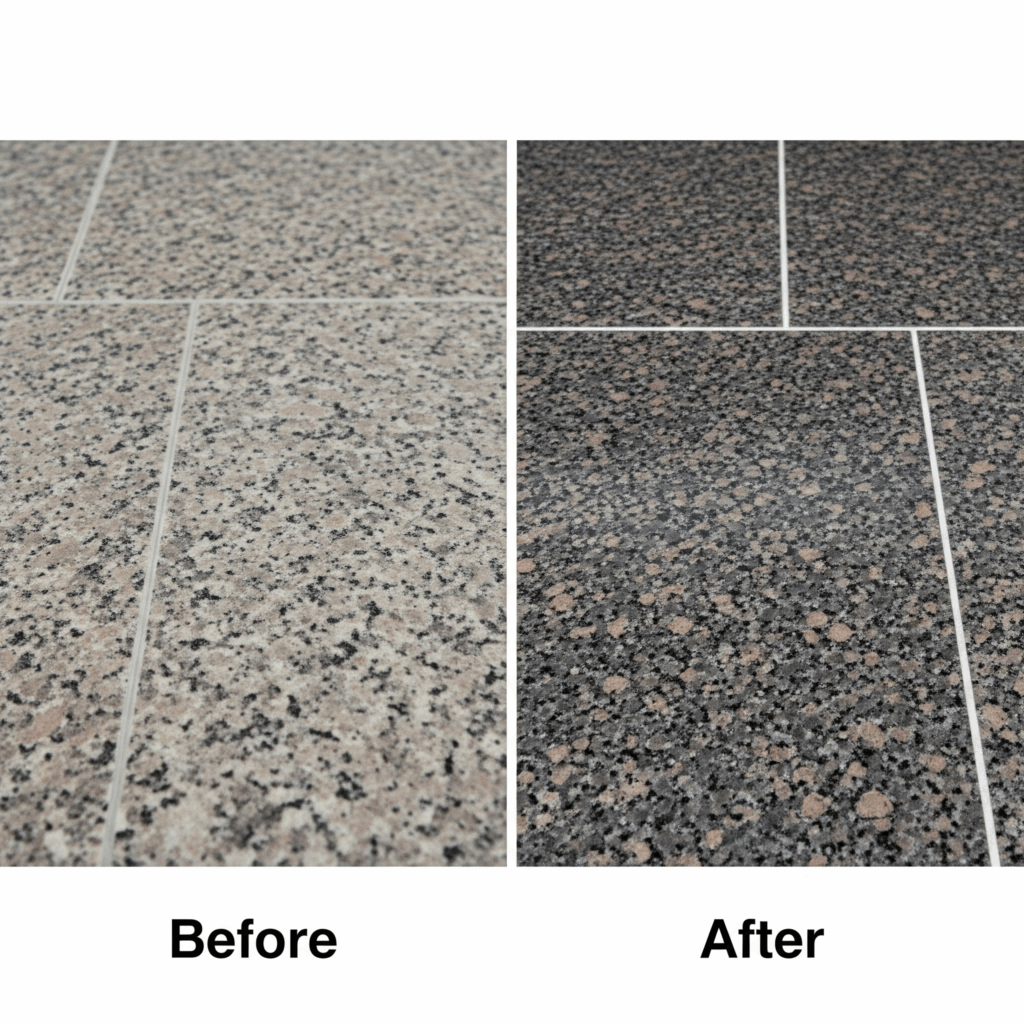
Natural stone tiles, such as marble, limestone, sandstone, slate, travertine, and granite, are porous materials. This means they have tiny holes and channels that can absorb liquids. Sealing these tiles is crucial for several reasons: * Protection against Staining: Natural stone can easily absorb spills like water, oil, wine, coffee, and other liquids, leading to permanent stains that are difficult or impossible to remove. A sealer creates a protective barrier that prevents these liquids from penetrating the stone’s surface. * Resistance to Water and Moisture Damage: Porous stone can absorb water, which can cause several problems. In colder climates, absorbed water can freeze and expand, leading to cracks and damage. In damp areas like bathrooms and kitchens, moisture absorption can promote the growth of mold and mildew. Sealing helps to make the stone water-repellent. * Prevention of Dirt and Grime Buildup: The pores in natural stone can trap dirt, dust, and grime, making the tiles look dull and requiring more effort to clean. Sealing fills these pores, creating a smoother surface that is easier to wipe clean and maintain. * Enhancement of Durability and Longevity: By protecting against staining, water damage, and dirt buildup, sealing helps to preserve the integrity and appearance of the natural stone tiles, extending their lifespan. * Easier Maintenance: Sealed tiles are much easier to clean and maintain. Regular wiping with a mild cleaner is usually sufficient to keep them looking their best. * Prevention of Bacterial Growth: In areas like kitchens and bathrooms, the absorption of liquids into porous stone can create a breeding ground for bacteria. Sealing helps to prevent this by creating a less hospitable environment for microbial growth. * Protection Against Acidic Substances: Some natural stones, like marble and limestone, are particularly susceptible to etching and damage from acidic substances such as citrus juices and vinegar. While a sealer may not provide complete protection against strong acids over prolonged exposure, it can offer a degree of resistance.Think of natural stone like a sponge. Without a sealer, it will readily soak up anything that comes into contact with it. A sealer acts like a protective coating, making the surface less absorbent and much more resistant to the elements of daily life.The type of sealer and the frequency of application will depend on the type of stone, its porosity, and the amount of traffic and exposure to liquids it experiences. For example, bathroom and shower areas might require more frequent sealing than a floor in a low-traffic living room.

Leave a Comment